
Markets US
Uber reported $14.77 billion in third-quarter revenue, exceeding analyst forecasts, but its core mobility unit saw a 2% revenue drop, highlighting challenges in its primary business lines.
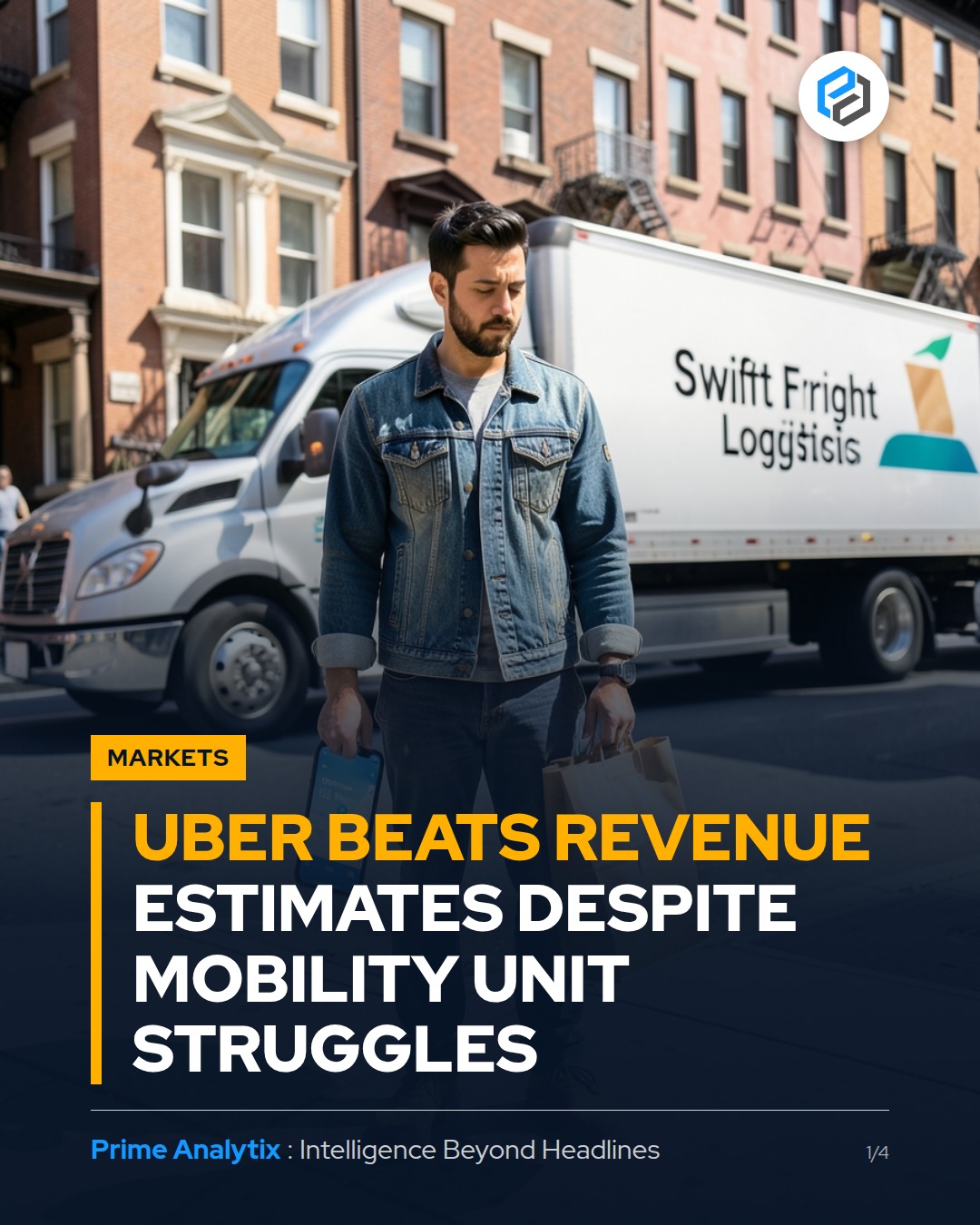
Uber’s third-quarter revenue reached $14.77 billion, surpassing the $14.69 billion average analyst estimate, driven by a 34% surge in freight sales to $1.76 billion. However, its mobility unit revenue declined 2% to $7.52 billion, missing the $7.71 billion estimate, while food delivery revenue grew 23% to $5.49 billion, falling short of the $5.51 billion forecast. Net income dropped 92% year-over-year to $512 million, reflecting reduced reliance on tax benefits. The company’s total bookings aligned with analyst expectations at $59.82 billion.
The freight division’s strong performance signals a strategic shift toward logistics, but the mobility unit’s struggles with fuel costs and driver shortages underscore operational vulnerabilities. Meanwhile, food delivery growth suggests potential for further scaling in third-party delivery markets. Uber’s plan to deploy over 2,000 fully driverless vehicles by 2027 could enhance efficiency but requires significant capital investment.
Investors face mixed signals as the revenue beat contrasts with underperforming core units. Competitors in ride-hailing and delivery services may face intensified competition from Uber’s freight expansion. Risks include sustaining freight growth without increased investment and maintaining profitability amid declining tax benefits. Opportunities lie in diversifying revenue streams through logistics and reducing labor costs via automation.
The company’s next earnings report is expected in early 2027, with key questions remaining about whether freight expansion can offset challenges in mobility and delivery. Uber’s ability to balance growth in new markets with operational efficiency will determine long-term profitability.
Uber plans to deploy over 2,000 fully driverless vehicles by the end of 2027, continuing its focus on logistics expansion.
Uber’s revenue beat highlights freight growth potential, but core unit underperformance raises doubts about long-term profitability without significant investment.
Topics: Uber, Revenue Growth, Freight Logistics, Food Delivery, Net Income, Driverless Vehicles, Ride-Hailing, Earnings Report, Logistics Expansion, Third-Party Delivery
#UberRevenue #FreightGrowth #FoodDelivery #DriverlessVehicles #EarningsReport #LogisticsExpansion #RideHailing #NetIncome #ThirdPartyDelivery
Source: CNBC
Post a Comment
Post a Comment