
Markets US
Oracle filed to raise $20 billion via stock and bonds to fund AI expansion, but shares fell 5% as debt concerns resurfaced.
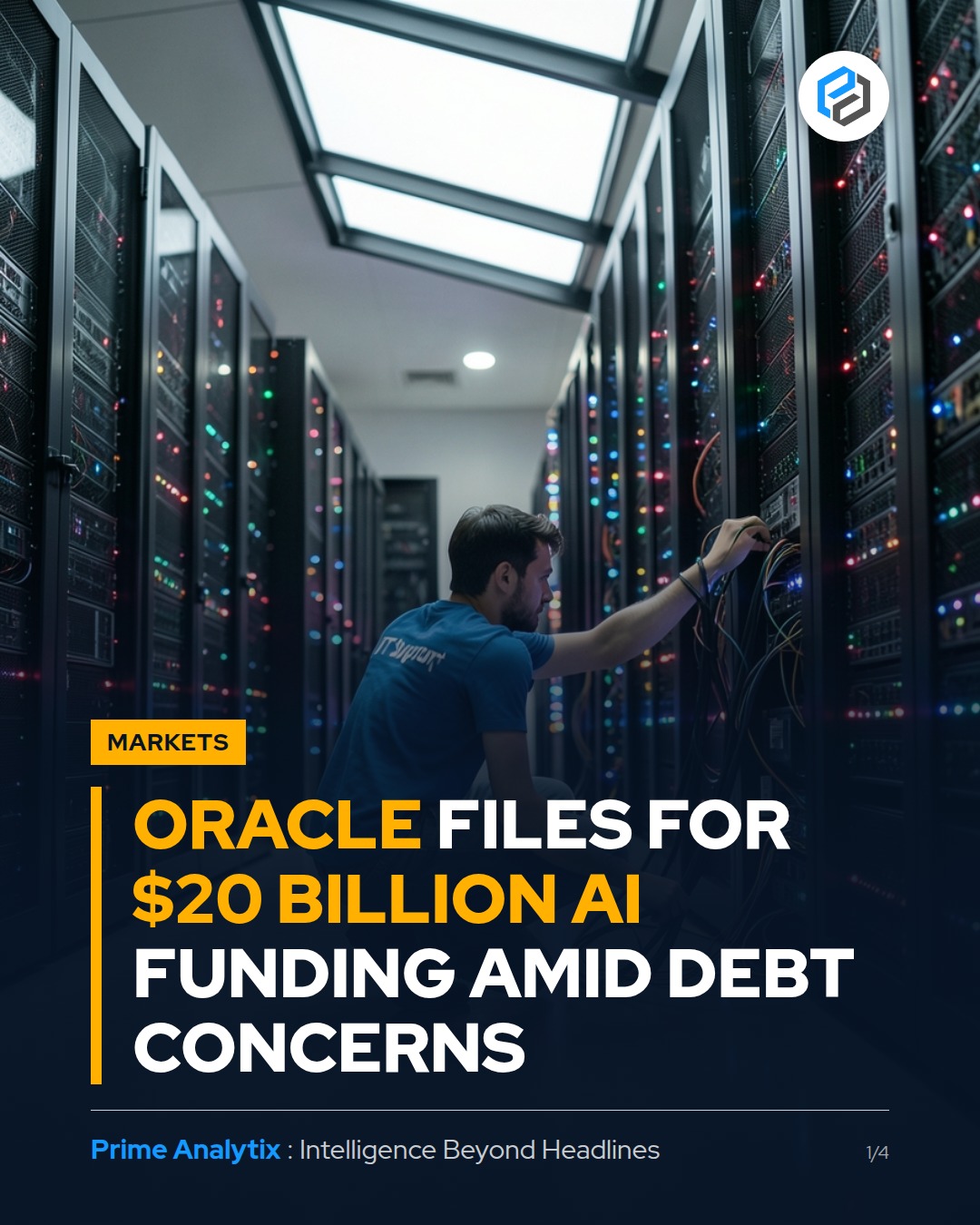
Oracle announced plans to issue $10 billion in common stock and $10 billion in senior notes to finance its AI initiatives, a move outlined at an investor day last week. The filing triggered a 5% drop in its stock price, reflecting investor unease over its growing debt load. Oracle's shares have declined 33% in 2026 and 50% year-to-date, while its five-year credit default swaps widened to 296, up 270% in one year. The company’s debt totaled $125.34 billion as of August 31, and its credit rating was downgraded to BBB- by S&P in July. The fundraising underscores Oracle’s strategic pivot to AI infrastructure despite market skepticism about its ability to manage debt while executing its AI roadmap.
The $20 billion raise highlights broader market anxieties about AI investment sustainability, with credit spreads now aligning more closely with high-yield bond benchmarks despite Oracle’s investment-grade rating. The yield on its 4.95% investment-grade bond due in 2031 is 7.267%, signaling heightened risk perception. Oracle expects to achieve positive free cash flow in the second half of 2028, but its fiscal 2030 revenue forecast of at least $225 billion remains a key growth target. Investors and creditors face increased default risk, while AI competitors may benefit from Oracle’s capital allocation decisions.
The move raises questions about Oracle’s ability to balance debt management with AI innovation. While the $20 billion raise provides flexibility for capital expenditures and innovation, the stock price decline and credit spread widening suggest lingering doubts about the return on AI investments. The company’s debt-to-equity ratio remains elevated, and its 2026 performance highlights the challenges of sustaining growth amid rising interest rates and market volatility. Oracle’s success in this transition will depend on its ability to deliver tangible AI-driven revenue without further capital raises.
The filing also underscores the broader risks of overleveraging in the AI sector. Creditors now face higher default risk, and investors remain skeptical about Oracle’s ability to execute its roadmap. Competitors may gain from Oracle’s strategic bets, but the company’s position as a leader in enterprise AI solutions hinges on its capacity to convert AI investments into sustainable profitability. The market will closely watch Oracle’s progress toward its 2030 revenue target and free cash flow goals as a barometer for AI investment viability.
Oracle aims to achieve positive free cash flow by 2028, using vendor financing and customer prepayments to support its AI transition.
Oracle’s $20 billion AI push underscores its high-stakes bet on AI growth, with success hinging on execution amid rising debt concerns.
Topics: AI Investment, Oracle Financials, Credit Risk, Corporate Strategy, Market Analysis, Debt Management, Free Cash Flow, Enterprise AI Solutions
#OracleAI #AIInvestment #CreditRisk #CorporateStrategy #MarketAnalysis #DebtManagement #FreeCashFlow #EnterpriseAISolutions
Source: CNBC
Post a Comment
Post a Comment