
Markets US
Oil prices fell sharply this week as investors braced for renewed U.S.-Iran military escalation, with Brent crude dropping 1.38% to $96.93 per barrel and WTI falling 1.49% to $89.17. Analysts estimate an 80% chance of renewed conflict, adding to market uncertainty.
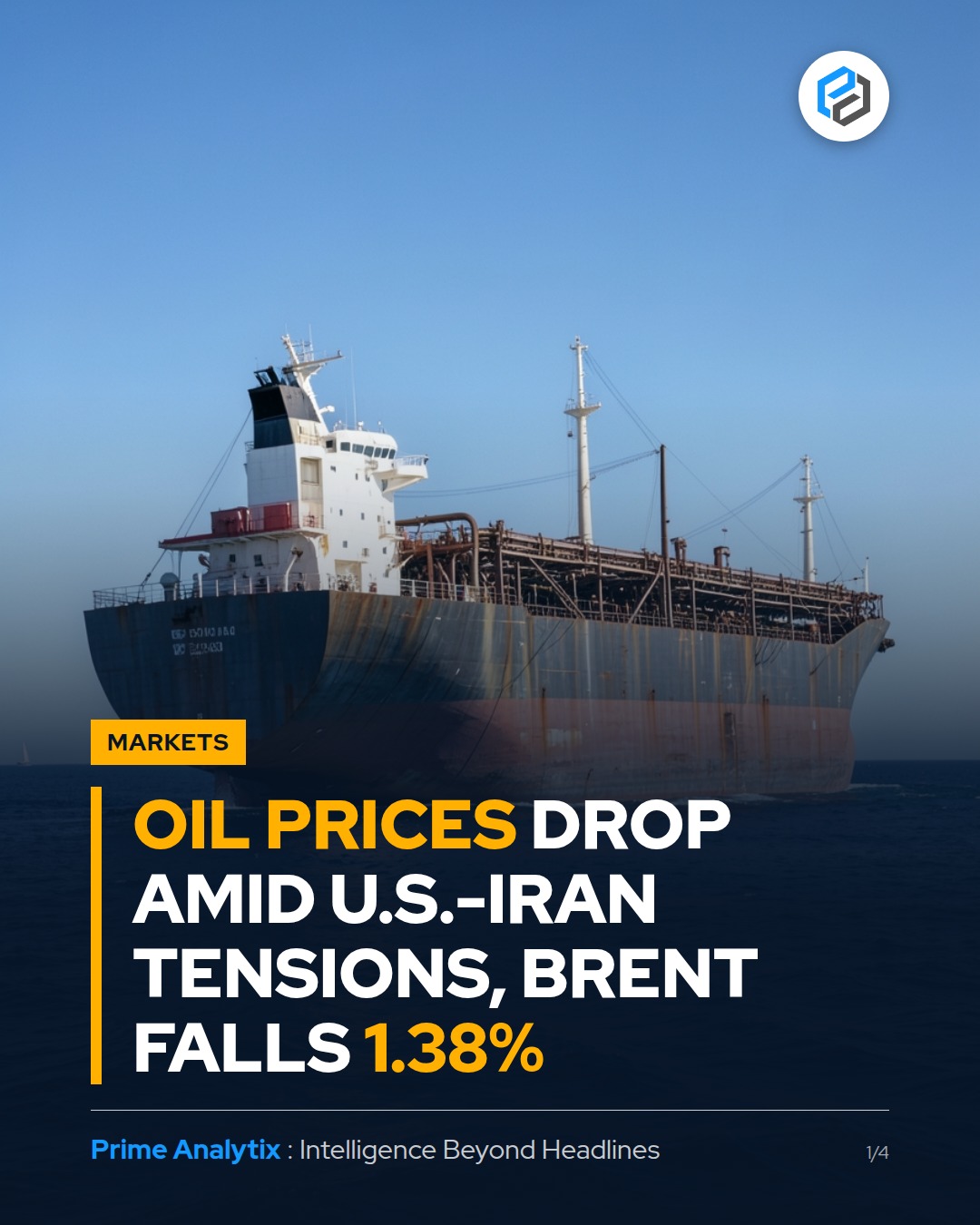
Oil prices declined Friday as geopolitical tensions between the U.S. and Iran intensified, with Brent crude futures falling 1.38% to $96.93 per barrel and U.S. WTI crude dropping 1.49% to $89.17 per barrel. The drop followed reports of three additional attacks on oil tankers in the Strait of Hormuz, with UKMTO data showing attacks at a near-record rate. Rapidan Energy Group President Bob Mc Nally warned of an 80% probability of renewed military conflict, citing ongoing threats to Middle Eastern oil supplies.
The weekly price slump reflects investor anxiety over potential disruptions to global energy markets, with Brent crude futures briefly rising to nearly $100 a barrel before reversing gains. Analysts noted shifting sentiment toward diplomatic resolution, though unresolved tensions could prolong volatility. Oil producers face revenue risks if prices remain low, while Middle Eastern nations and global economies reliant on oil imports remain vulnerable to supply shocks.
Market uncertainty underscores the sensitivity of energy prices to geopolitical developments. Analysts suggest that successful negotiations could stabilize markets, but prolonged conflict risks further price swings. Energy companies may face short-term revenue pressures but could benefit from long-term strategic positioning if geopolitical risks abate. The focus remains on whether diplomatic efforts will prevent further market instability.
Ongoing attacks on oil tankers in the Strait of Hormuz and the unresolved U.S.-Iran conflict pose significant risks. Analysts warn that failure to reach a diplomatic resolution could sustain elevated oil prices, while continued military escalation might disrupt Middle Eastern oil supplies. The key uncertainty lies in whether diplomatic progress can mitigate the impact of geopolitical tensions on global energy markets.
Ongoing attacks on oil tankers in the Strait of Hormuz are expected to continue, per UKMTO data. Analysts will monitor diplomatic developments following Iran's reported nuclear proposal to Washington through Qatar.
The key uncertainty remains whether diplomatic efforts will prevent further market volatility, with analysts predicting an 80% chance of renewed military action.
Topics: Geopolitical Risk, Energy Markets, Oil Prices, U.S.-Iran Conflict, Market Volatility, Diplomatic Negotiations, Strait Of Hormuz, Energy Supply
#OilPrices #USStrategy #IranConflict #EnergyMarkets #GeopoliticalRisk #DiplomaticNegotiations #StraitOfHormuz
Source: CNBC
Post a Comment
Post a Comment