
Markets US
Intel's stock plunged 29% on October 7, 2026, marking its worst single-day decline since the 1970s, with a 45% monthly drop—the steepest on record—as revenue forecasts fell $1B–$2B below estimates.
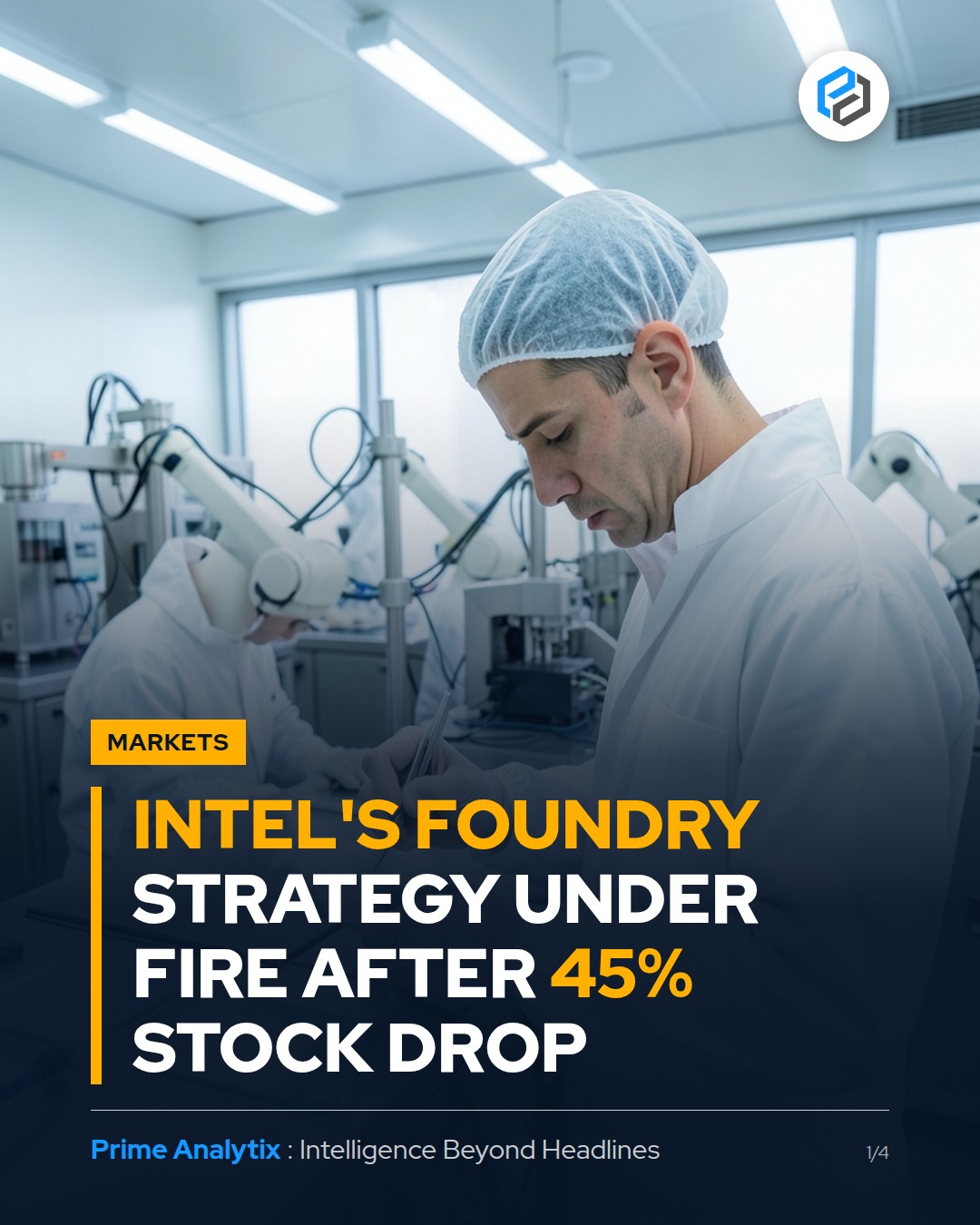
Intel's foundry strategy faces scrutiny after its stock collapse and revenue shortfall highlighted the urgency to secure external customers and expand capacity to compete with TSMC. The company shifted Oregon fab capacity from 18A chip production to older Intel 3 nodes for data center products, raising concerns about its foundry business credibility. Intel's data center business grew 78% year-over-year in Q3 2026 to $7.3 billion, but supply constraints for wafers, substrates, and memory could delay revenue growth. The U.S. government holds a 10% stake in Intel since August 2025, and Nvidia's $5 billion investment in August 2025 contributed to a sixfold stock rise over 10 months. However, Intel's reliance on internal demand for 18A chips risks straining finances if foundry revenue doesn't materialize.
The global server CPU market is projected to grow fivefold to $200 billion over the next five years, offering a potential lifeline for Intel's data center business. Yet, the company lacks marquee customers for its most advanced chips, and shifting production to older nodes may deter foundry clients. Intel's PC segment, which accounts for roughly half of its revenue, faces declining demand, further pressuring financials. Competitors like TSMC and AMD face indirect pressure as Intel's foundry ambitions could reshape semiconductor supply chains.
Intel's shift to older nodes risks undermining credibility with potential customers, while supply chain constraints for wafers, substrates, and memory limit capacity expansion. The company's ability to attract large-scale foundry clients within a year will determine whether its strategy can avoid worsening financial stress. Investors remain concerned about the 45% monthly decline and uncertainty over Intel's foundry viability, with the U.S. government and industry experts continuing to pressure Intel to address capacity and supply chain challenges.
AMD will report Q3 2026 results after the market close on November 2, 2026. Intel may announce additional foundry customers in the next two quarters.
Intel's foundry strategy hinges on securing external clients to offset declining PC revenue and supply chain constraints.
Topics: Semiconductor Manufacturing, Data Center Growth, Semiconductor Industry, TSMC, Nvidia, U.S. Government, Stock Market, Intel
#IntelFoundry #SemiconductorMarket #StockPlunge #DataCenterGrowth #TSMCCompetition #NvidiaInvestment
Source: CNBC
Post a Comment
Post a Comment