
Markets US
The Bank of England raised its key interest rate to 4% on Thursday, its first hike since 2023, as inflation risks from Middle East tensions push forecasts to near 5% by mid-2027.
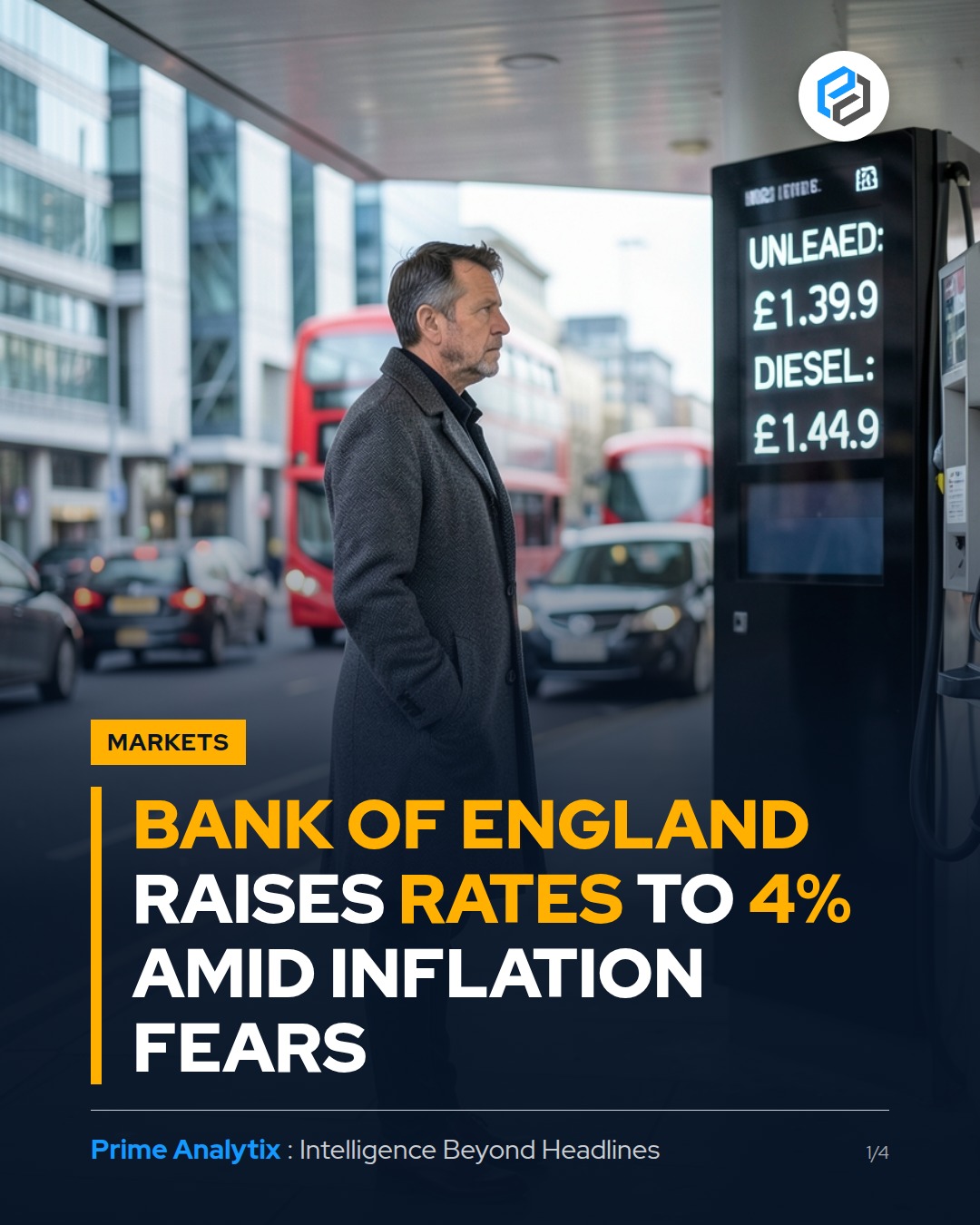
The central bank increased rates by 25 basis points, with one Monetary Policy Committee member voting for a larger 50 basis point hike to 4.25%. Policymakers linked inflation pressures to the U.S.-Iran conflict, which has driven energy price volatility. UK inflation rose to 3.5% in September 2026, driven by soaring fuel costs, while 10-year government bond yields climbed to 5.1546%.
The rate hike aims to counter inflationary pressures from elevated energy prices, but risks include second-round inflation effects from higher costs. The Bank’s credibility in managing inflation is critical, as prolonged high rates could stifle economic growth. Energy price volatility remains a key uncertainty.
Consumers and businesses face higher borrowing costs, with energy-importing firms and households particularly vulnerable to rising fuel prices. Investors in UK government bonds and the pound are affected by yield changes and currency volatility. Higher yields on gilts could benefit fixed-income investors seeking returns.
The Bank faces risks if inflationary pressures persist beyond 2027, undermining the effectiveness of rate hikes. However, proactive measures may reinforce policy credibility, supporting long-term inflation control.
The Bank of England will monitor energy price trends and inflation dynamics. Markets will assess the likelihood of further hikes in December 2026, with traders pricing in a one-in-four chance.
The Bank’s rate hike targets inflation from Middle East tensions, but success hinges on energy price stability without stifling growth.
Topics: UK Economy, Interest Rates, Inflation, Central Banking, Energy Prices, Monetary Policy, Government Bonds
#UKInflation #InterestRates #BankOfEngland #MonetaryPolicy #EnergyPrices #GiltYields
Source: CNBC
Post a Comment
Post a Comment