
Markets US
Apple shares fell 3% on Tuesday as CEO John Ternus faced his first earnings report, with the company's gross margin forecast for the December quarter falling short of analyst expectations. The 45%-46% margin range missed the 46.3% average estimate, signaling ongoing pressure from rising memory costs.
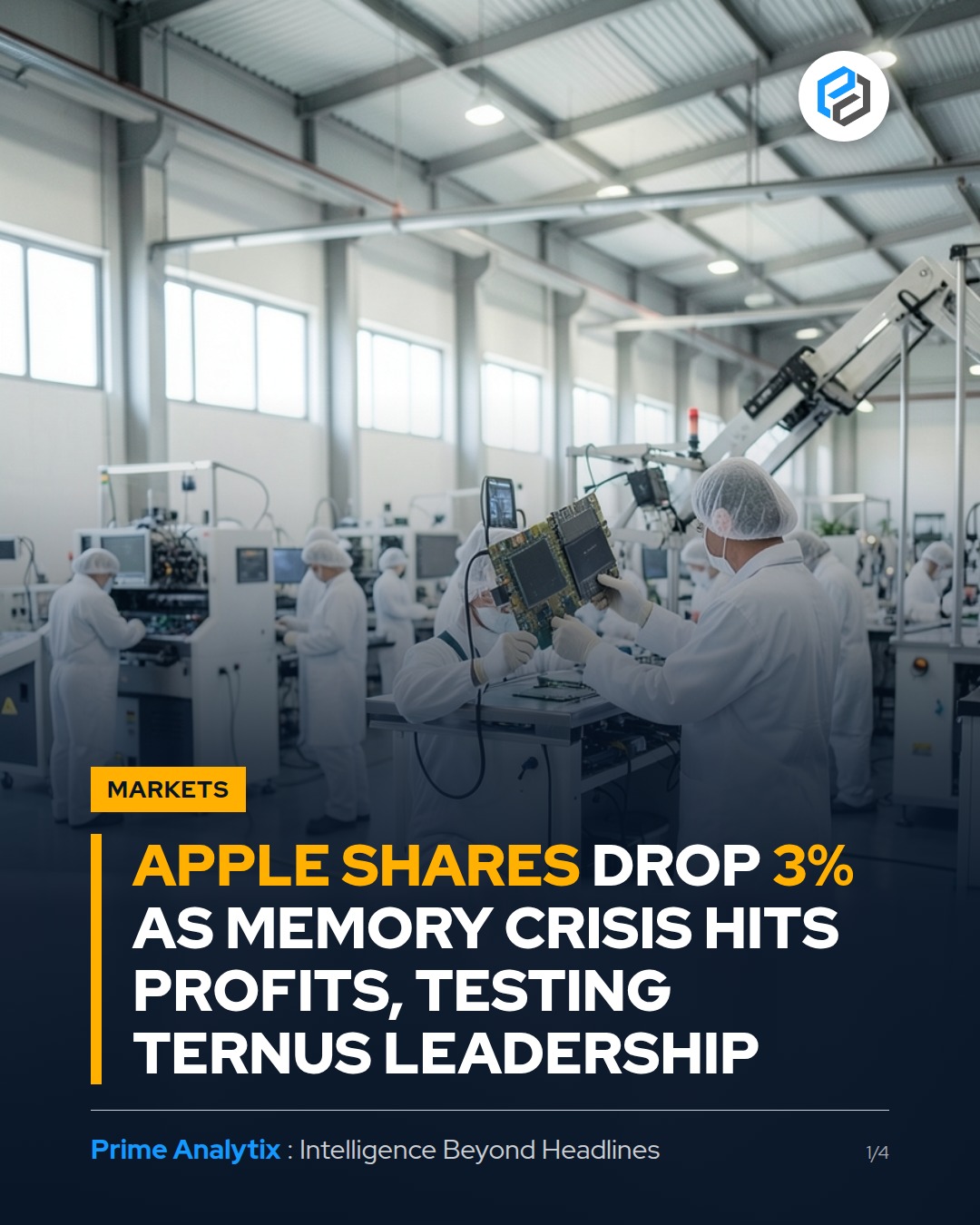
Apple's gross margin forecast for the December quarter was 45%-46%, below the 46.3% average analyst estimate, according to CNBC. The decline follows a 3% drop in shares, driven by higher memory costs and expenses tied to Siri AI. Apple warned of continued memory price hikes and supply constraints for iPhones and Macs in the holiday quarter. The company's gross margin in the June quarter was 50.1%, and in the September quarter was 47.9%, with the current forecast marking its lowest since late 2023. Apple's purchase obligations for memory surged $33 billion from the June quarter to September, reflecting heightened demand. Despite the margin pressure, Apple's gross margins remain above the 38%-39% range seen during Tim Cook's earlier tenure. The company sold more Macs in its fiscal year than any previous period, according to IDC data.
The margin decline highlights Apple's vulnerability to global memory shortages, which could erode pricing power. However, its strong services business and cost-absorption capacity may offset some pressures. Competitors like Intel, Nvidia, and Windows PC manufacturers face similar supply constraints and higher memory costs. Apple's supply chain partners and memory suppliers are also impacted by the company's increased purchase obligations. Analysts note that while Apple's margin compression is concerning, its diversified revenue streams and operational efficiency could mitigate long-term impacts.
Rising memory prices and supply constraints pose risks to Apple's profitability and sales growth. The company's reliance on memory suppliers exposes it to semiconductor market volatility. However, opportunities may arise as Windows PC and Android phone manufacturers struggle to absorb rising costs. Apple's increased purchase obligations could secure supply stability for critical components, potentially allowing it to gain market share from struggling rivals. The broader implications for the tech sector remain uncertain, with global memory shortages continuing to disrupt supply chains.
Investors and shareholders are directly affected by the stock price drop and margin concerns. Competitors face supply constraints and higher costs, while Apple's supply chain partners navigate increased demand. The key uncertainty lies in whether memory prices will persist and how competitors will adapt. Apple's ability to manage these challenges will determine its long-term resilience in a tightening market.
Apple's margin decline underscores the impact of global memory costs, but its services business and cost management may limit long-term damage. The critical test is whether rising memory prices will persist and how competitors respond.
Topics: Apple, Stock Market, Memory Crisis, Semiconductor, Supply Chain, Tech Sector, IPhone, Services Revenue, Memory Prices, Corporate Leadership
#AppleStock #MemoryCrisis #GrossMargin #Semiconductor #SupplyChain #TechSector #iPhoneSales #ServicesRevenue #MemoryPrices #CorporateLeadership
Source: CNBC
Post a Comment
Post a Comment