
Markets US
UnitedHealth Group reported third-quarter adjusted earnings of $4.69 per share, beating analyst estimates, and raised its 2026 profit outlook to at least $20.50 per share, signaling progress in managing rising medical costs.
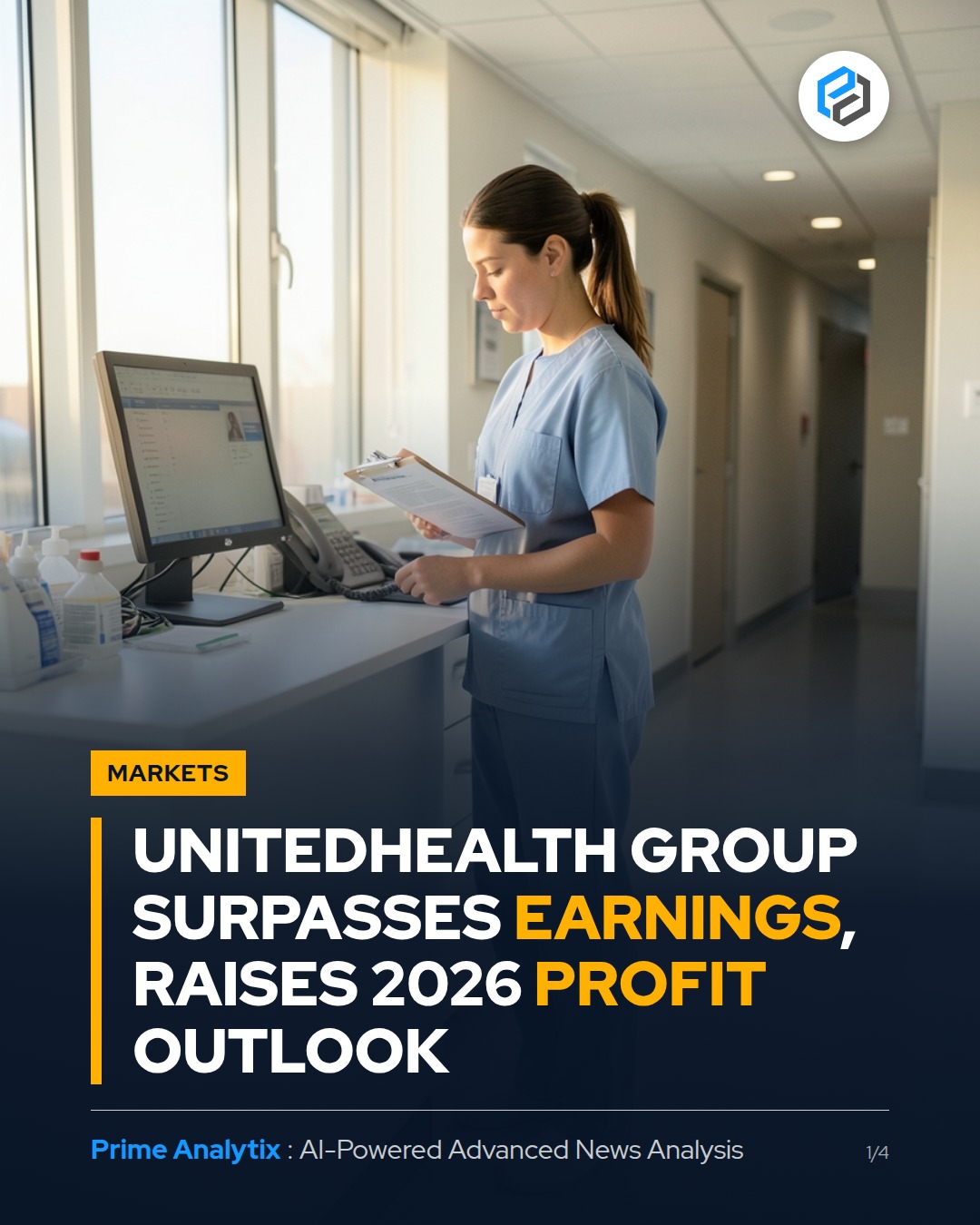
UnitedHealth Group's third-quarter adjusted earnings per share reached $4.69, surpassing the $4.14 expected by analysts, according to CNBC. Revenue totaled $112.69 billion, exceeding the $111.40 billion forecast. The company also raised its full-year 2026 adjusted earnings outlook to at least $20.50 per share, up from $19.50 to $20.00. UnitedHealth noted a 15% year-over-year decline in acute hospital admissions and a 10% rise in home health admissions, reflecting a shift toward lower-cost care settings. The company's medical cost ratio for Q3 was 88.4%, below the 89.9% analysts anticipated, while net income rose to $4.11 billion, or $4.56 per share, from $2.35 billion, or $2.59 per share, a year earlier. The IDR process under the No Surprises Act is adding at least 100 basis points to total medical costs, according to the report.
The company's focus on value-based care and AI investments highlights its strategy to control medical costs amid a challenging healthcare landscape. Analysts noted that these initiatives could set a precedent for cost management in the industry, though their long-term effectiveness remains a critical test. Elevated medical costs from the IDR process and high inpatient and specialty pharmacy drug costs pose risks to margin sustainability. However, opportunities include expanding AI-powered tools to reduce administrative burdens and growth in value-based care models that align provider incentives with cost-effectiveness and quality outcomes.
Direct stakeholders, including investors and shareholders, may benefit from the earnings beat and profit outlook, which could drive stock performance. Indirect stakeholders, such as healthcare providers and patients, may see changes in care delivery models and cost structures. The company's ability to sustain cost reductions amid regulatory pressures will be key to its competitive position and investor confidence.
The report highlights unresolved issues, including the effectiveness of AI and value-based care strategies in maintaining profitability. The company's success in integrating these initiatives into care delivery will determine its long-term resilience in the healthcare sector.
UnitedHealth Group expects the compounding effects of its AI and value-based care initiatives to improve medical cost management through the fourth quarter and into 2027.
UnitedHealth Group's earnings beat and profit outlook reflect progress in managing medical costs, but the long-term success of its AI and value-based care strategies remains uncertain. Sustaining cost reductions amid regulatory pressures will be critical to its competitive position.
Topics: Healthcare, Finance, Earnings Report, AI, Value-Based Care, Medical Costs, UnitedHealth Group, Investment, Healthcare Innovation
#UnitedHealthGroup #EarningsReport #AIInvestments #ValueBasedCare #MedicalCosts #HealthcareSector #Investment #HealthcareInnovation
Source: CNBC
Post a Comment
Post a Comment