
Markets US
Tesla’s Cybercab, a driverless robotaxi, has expanded to 169 vehicles in Texas, up from 45 at launch, but mixed reviews and a NHTSA safety audit highlight challenges in scaling its autonomous ride-hail service.
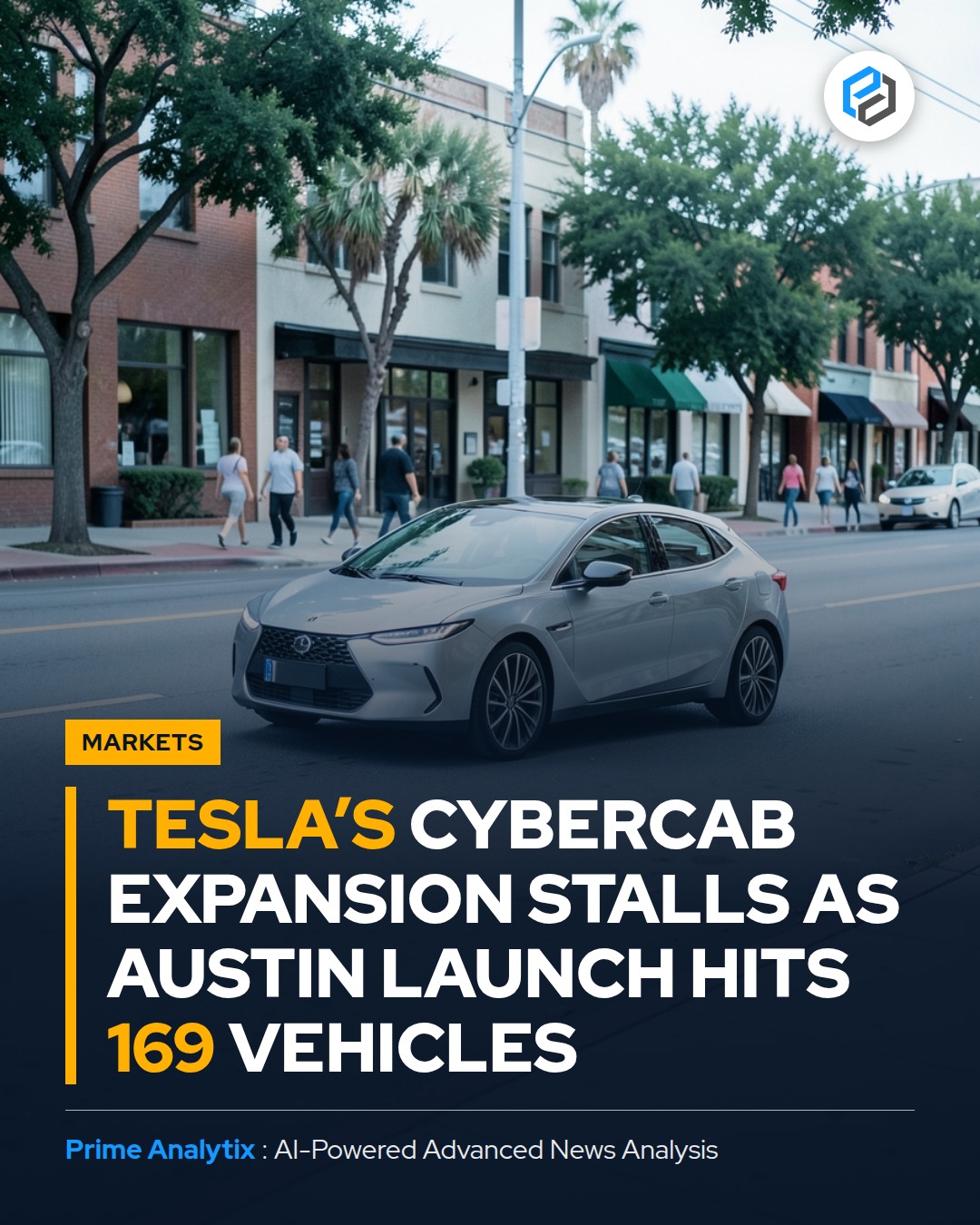
Tesla’s Cybercab rollout in Austin, Texas, has faced mixed public feedback, with users reporting wait times, incorrect drop-offs, and technical glitches. The company now operates 169 authorized vehicles in the state, up from 45 at launch, according to CNBC. However, 70% of U.S. respondents in a September 2026 survey said they would not feel comfortable riding in a robotaxi without a steering wheel or pedals, while 50% expressed concerns about safety. The National Highway Traffic Safety Administration (NHTSA) has initiated a safety audit of Tesla’s Cybercab, raising regulatory hurdles for broader adoption.
Tesla’s third-quarter vehicle deliveries rose 5% year-over-year, but annual deliveries fell 2%, reflecting declining demand in its core automotive business. Competitors like Waymo, Alphabet’s autonomous driving unit, operate 4,000 driverless vehicles in the U.S. and conduct 500,000 paid rides weekly. Waymo’s 270 million fully autonomous miles of commercial driving domestically underscore its established presence in 15 U.S. markets and international expansion, including London, Tokyo, and Munich. Tesla’s Robotaxi business is seen as a key growth driver, but its struggles to match Waymo’s scale and address public skepticism threaten its long-term viability.
Investors are concerned as Tesla’s stock has fallen 18% this year, while regulators and first responders weigh safety protocols for vehicles without manual controls. Public skepticism, technical reliability issues, and regulatory scrutiny from NHTSA could delay Tesla’s expansion plans. Meanwhile, opportunities include scaling to Texas cities like San Antonio and Dallas, and states with favorable AV regulations such as Nevada and Florida. Improving user experience and safety remains critical to overcoming competition from Waymo and Chinese EV makers like BYD and Xiaomi.
Unresolved issues include Tesla’s ability to meet NHTSA safety standards and address customer complaints. The company’s expansion plans to new markets will face regulatory discussions on emergency control protocols for autonomous vehicles, complicating its path to dominance in the robotaxi market.
Tesla plans to expand Cybercab operations to San Antonio, Dallas, Nevada, and Florida. The company will face NHTSA safety audit requirements and regulatory discussions on emergency control protocols for AVs. Waymo continues to expand its U.S. and international operations.
Tesla’s Cybercab faces significant technical and regulatory challenges as it seeks to scale its autonomous ride-hail service. Success depends on improving user experience and meeting safety standards, but public skepticism and competition from Waymo and Chinese EV makers pose risks. The key uncertainty is whether Tesla can overcome these hurdles to establish dominance in the robotaxi market.
Topics: Autonomous Vehicles, Tesla, Waymo, NHTSA, Robotaxi, EV Competition, AV Regulations, Driverless Technology
#TeslaCybercab #AutonomousVehicles #Waymo #NHTSA #Robotaxi #EVCompetition #AVRegulations
Source: CNBC
Post a Comment
Post a Comment