
Markets India
Shree Cement’s September-quarter net profit dropped 15% year-on-year to Rs 263 crore, driven by a 56% rise in fuel costs, despite 24% revenue growth. The decline highlights mounting pressure from rising input costs in a competitive sector.
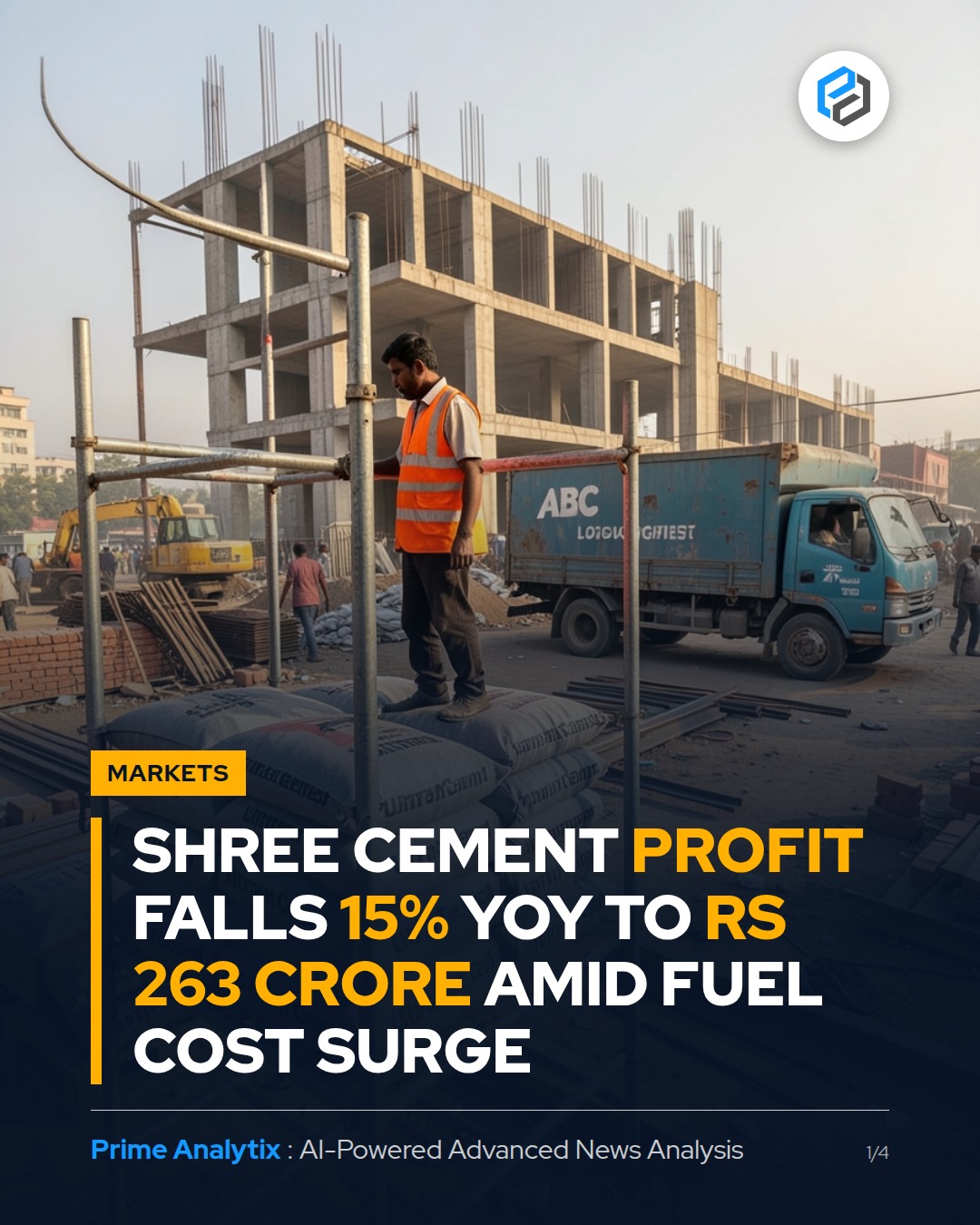
Shree Cement’s profit decline underscores the strain of soaring fuel costs, which surged 56% to Rs 1,843.25 crore, outpacing revenue growth. While revenue from operations rose 24% to Rs 5,897 crore and sales volume increased 14% to 10.52 million tonnes, the company’s EBITDA per tonne of cement fell 8% to Rs 966. Premium products now account for 28.7% of trade volumes, up from 21.1% a year earlier, signaling a shift toward higher-margin offerings.
The company’s consolidated EBITDA rose to Rs 1,016 crore from Rs 974 crore a year earlier, but rising power and fuel costs are eroding margins. Analysts note that while demand remains strong, Shree Cement’s ability to offset cost pressures will determine its long-term profitability. The shift toward premium products may provide a competitive edge, but sustained cost management is critical.
Investors and customers are directly affected by the profit decline, which could impact stock valuation and lead to higher prices. Competitors may gain market share if Shree’s cost challenges persist. Risks include prolonged high fuel costs, weak monsoons reducing rural demand, and limited pricing power amid rising input costs. Opportunities lie in premium product growth and infrastructure investments, which could sustain cement demand.
The company’s focus on infrastructure projects like roads and railways may help maintain demand, but its ability to manage input costs remains a key uncertainty. Shree Cement’s strategy to balance cost pressures with premium product growth will shape its future performance.
Shree Cement expects continued investments in infrastructure to support demand. The company will monitor fuel cost trends and their impact on profitability.
Shree Cement’s profit decline highlights the challenge of balancing rising fuel costs with revenue growth. The key uncertainty is whether the company can effectively manage input costs and sustain growth in premium product sales.
Topics: Cement Industry, Financial Results, Fuel Costs, Premium Products, EBITDA, Infrastructure Investment, Share Price, Cost Management
#ShreeCement #FuelCosts #CementIndustry #EBITDA #PremiumProducts #InfrastructureInvestment #SharePrice #CostManagement
Source: ET Markets
Post a Comment
Post a Comment