
Results India
Indus Towers reported a 2.5% drop in net profit to Rs 1,793 crore for Q2, despite a 4% revenue rise to Rs 8,516 crore, driven by expansion in tower and co-location bases.
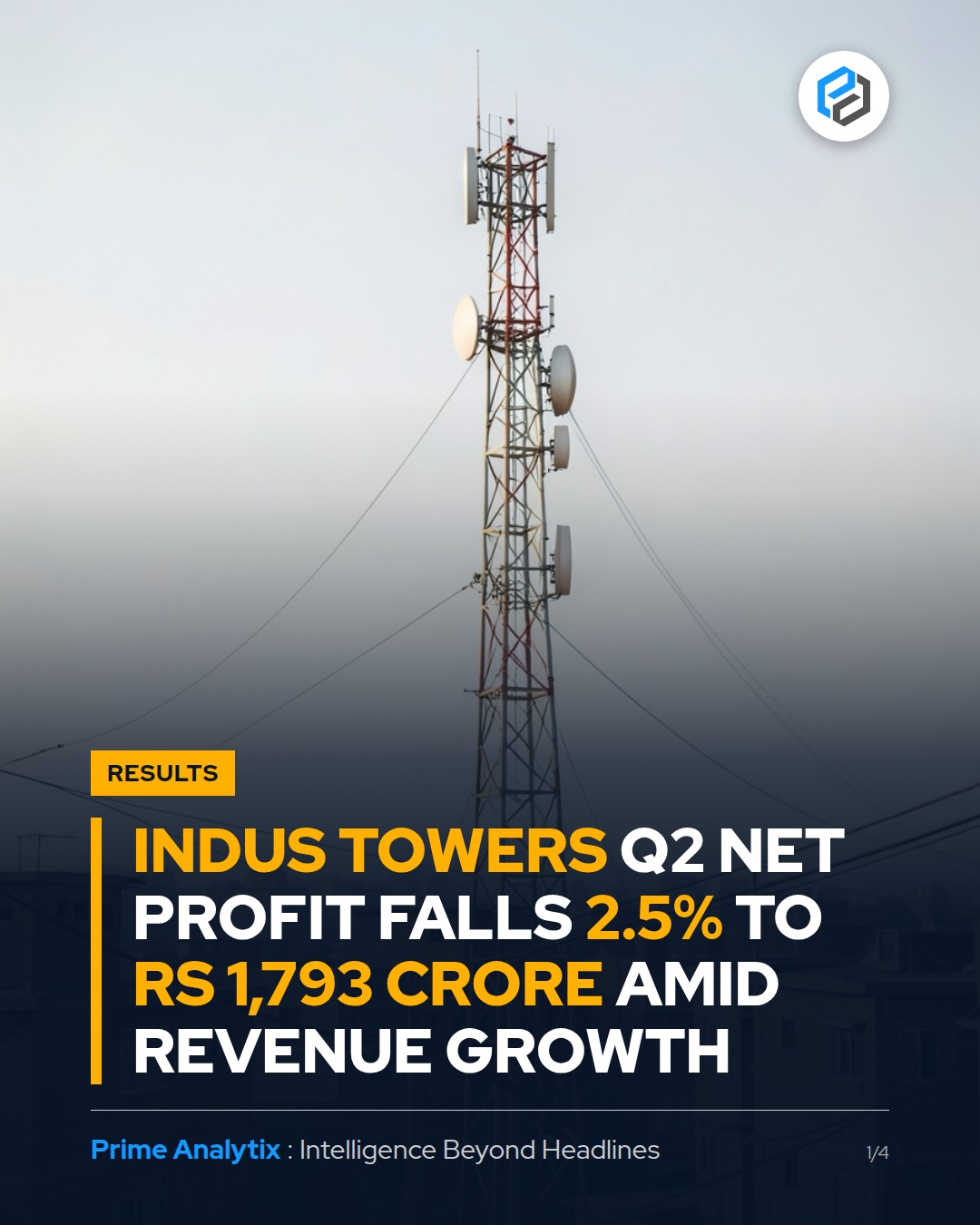
Indus Towers' Q2 results showed a 2.5% decline in consolidated net profit to Rs 1,793 crore, compared to Rs 1,838 crore in the prior-year quarter. The company attributed the drop to a Rs 195 crore write-back of provision for doubtful receivables. Revenue grew 4% year-over-year to Rs 8,516 crore, with EBITDA rising 0.4% to Rs 4,633 crore. Tower bases expanded 5.6% to 2,70,480 units, while co-location bases grew 5.9% to 4,40,153 units. The tenancy ratio improved to 1.63, reflecting stronger occupancy. Pre-tax return on equity fell to 25.3% from 38.4%, and post-tax return on equity dropped to 18.8% from 29%. The CEO highlighted AI-driven operational efficiency and digital energy management as key strategies to address margin pressures.
The profit decline, despite revenue growth, signals margin compression or one-time charges, raising concerns about profitability. However, the expansion of tower and co-location bases, along with improved tenancy ratios, underscores sustained demand for telecom infrastructure. Investors and shareholders face potential pressure on returns, while competitors may see intensified competition from Indus Towers' growth. Regulators and partners could be impacted by the company’s strategic focus on shared infrastructure and cost optimization.
The write-back of Rs 195 crore in doubtful receivables highlights liquidity or credit risk concerns. However, strong cash generation from operations and a healthy order book position Indus Towers to capitalize on expanding telecom infrastructure demand. The focus on AI-led transformation and low-cost shared infrastructure could enhance operational efficiency and customer retention, mitigating long-term margin pressures.
The company’s Africa rollouts are expected to gain momentum in the second half of 2026, supported by its infrastructure value proposition. However, declining return ratios and margin compression remain key risks that could affect shareholder returns and competitive positioning in the sector.
Indus Towers expects Africa’s initial rollouts to gain momentum in H2 2026, supported by a healthy order book and infrastructure value proposition.
Indus Towers’ Q2 results reflect revenue growth and infrastructure expansion, but profit decline and margin compression raise sustainability concerns. The success of its AI-driven efficiency initiatives and Africa rollouts will shape long-term performance.
Topics: Telecom Infrastructure, Financial Results, India Markets, EBITDA Growth, Tower Operators, Return On Equity, AI Technology, Infrastructure Investment, Shareholder Returns, Competitive Strategy
#IndusTowers #TelecomInfrastructure #FinancialResults #EBITDAIncrease #TowerOperators #ReturnOnEquity #AITransformation #InfrastructureInvestment #ShareholderReturns #CompetitiveStrategy
Source: ET Markets
Post a Comment
Post a Comment