
Tech Global
Google launched the screen-less Fitbit Air fitness tracker in India on October 2, 2026, priced at ₹13,999 (~$146), significantly higher than its U.S. price of $99. The device offers advanced health tracking features like 24/7 heart rate monitoring and sleep analysis, but its premium pricing risks limiting mass adoption in a price-sensitive market where screen-less wearables hold only 5% of the market share.
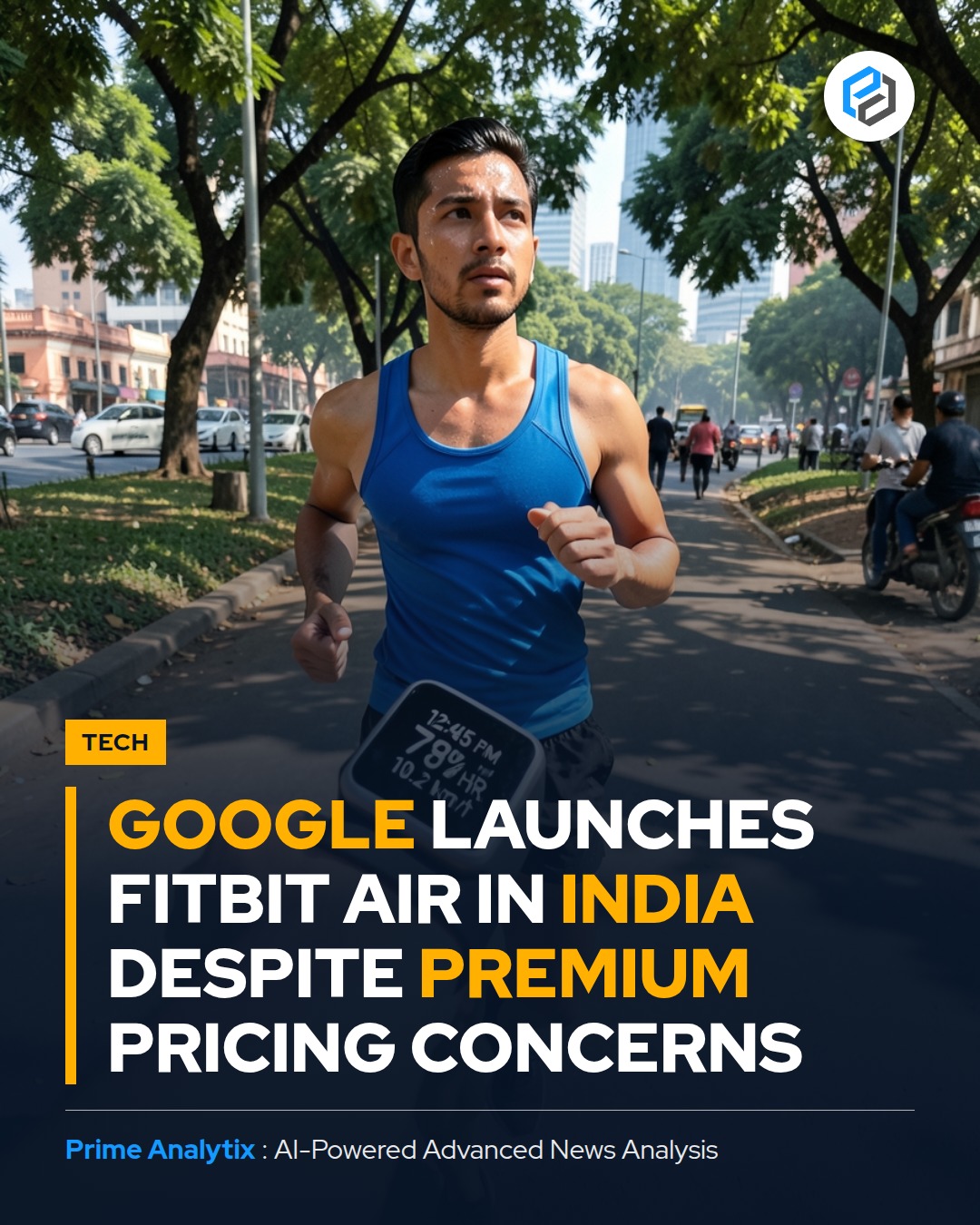
Google’s Fitbit Air, a screen-less fitness tracker with health monitoring capabilities, entered the Indian market on October 2, 2026, priced at ₹13,999 (~$146). This pricing contrasts sharply with its $99 cost in the U.S., raising concerns about affordability in a market where screen-less wearables account for just 5% of the segment (Counterpoint Research). The device includes features like 24/7 heart rate monitoring, A-fib alerts, blood oxygen tracking, and sleep stage analysis, positioning it as a premium offering in a space increasingly dominated by affordable alternatives.
The launch comes amid growing competition from brands like Garmin, Luffu Link (a venture by Fitbit’s founders), and Indian startups Noise and Urban, which have focused on undercutting Western rivals with lower-priced screen-less devices. Google’s premium pricing strategy risks diluting its potential market penetration, particularly in India where affordability is a key driver for consumer adoption. The free three-month Google Health premium membership included with the purchase may help offset initial purchase hesitation but may not address long-term price sensitivity.
Google’s entry into the screen-less wearable niche highlights the evolving demand for distraction-free health gadgets, yet the high price point could limit its appeal. Competitors like Garmin and local startups may gain traction by offering more cost-effective alternatives, while Google faces challenges in balancing brand prestige with market accessibility. The move also underscores the fragmented nature of the screen-less wearable market, where brand recognition alone may not guarantee success without competitive pricing.
Stakeholders face mixed outcomes: consumers may struggle with affordability, while competitors could benefit from increased market activity. Google and Fitbit risk alienating price-sensitive users, but the premium positioning could enhance brand visibility. However, the limited market share of screen-less wearables in India (5%) suggests the device’s success will depend on overcoming entrenched competition and shifting consumer priorities.
The Fitbit Air will be available on Google’s online store and major Indian retailers including Flipkart, Croma, Reliance Digital, and Vijay Sales starting October 2, 2026. The free Google Health premium membership will be offered to all buyers during the initial launch period.
Google’s Fitbit Air launch in India faces significant hurdles due to its premium pricing, which may deter price-sensitive consumers. While the device’s advanced health tracking features align with growing demand for screen-less wearables, its success will hinge on overcoming competition from cheaper local alternatives and achieving market penetration in a niche segment. The high price point risks limiting its appeal, despite the brand’s recognition.
Topics: Wearables Market, Tech Launches, Health Tracking Devices, Premium Pricing, Consumer Electronics, Fitbit, India Market, Competitive Analysis
#FitbitAirLaunch #WearablesMarket #PremiumPricing #HealthTracking #IndiaTech #ConsumerElectronics #MarketCompetition
Source: TechCrunch
Post a Comment
Post a Comment