
Markets US
The Federal Reserve kept interest rates unchanged at 3.75%-4%, with two dissenters urging a rate hike, as officials emphasized waiting for more data on inflation.
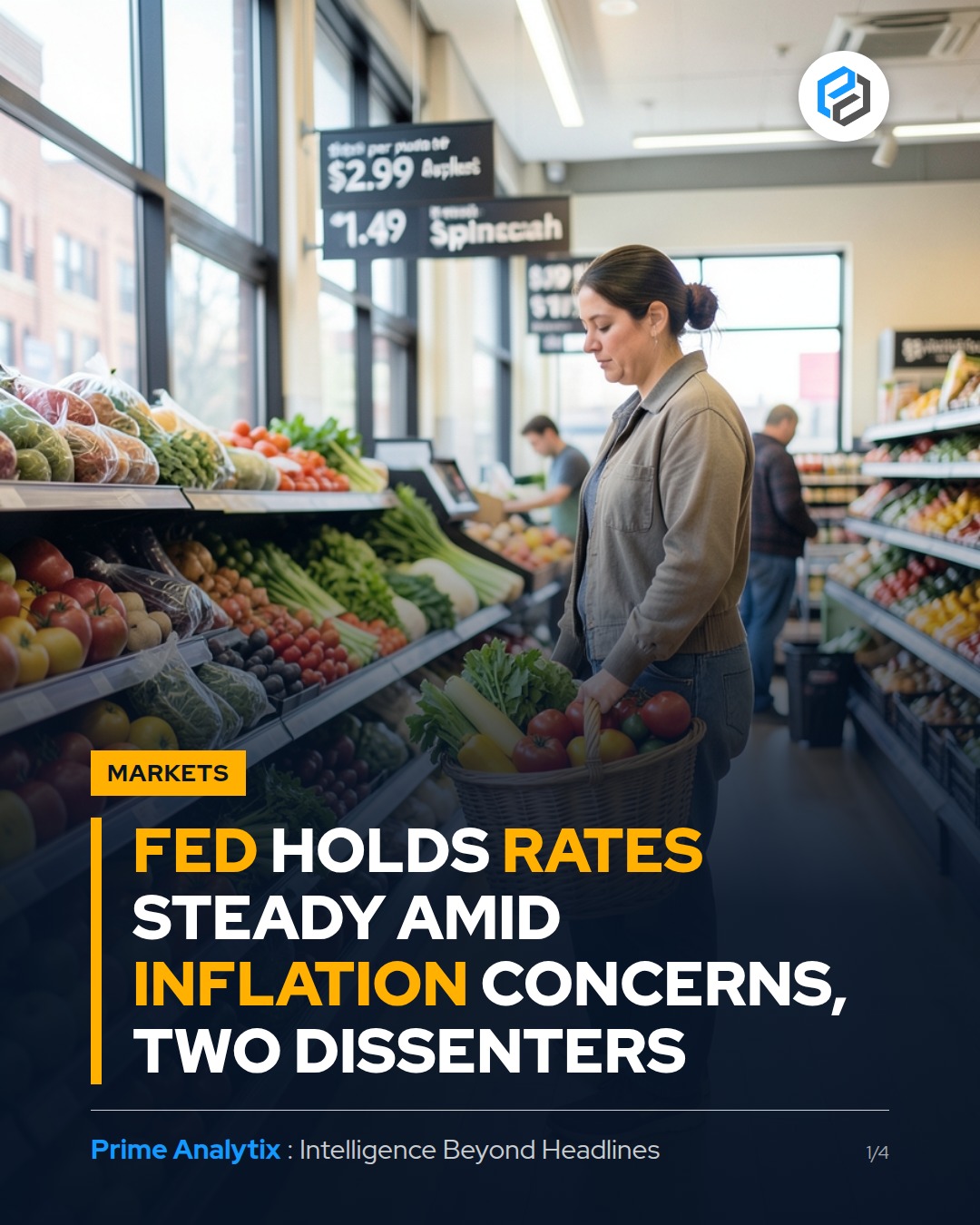
The Federal Reserve voted to maintain the overnight funds rate in a range of 3.75%-4%, where it has remained since September 2026, according to CNBC. Governor Lisa Cook and Cleveland Fed President Beth Hammack dissented, arguing for a 0.25 percentage point increase. The Fed acknowledged elevated inflation but stressed the need for "accumulation of more information" before further action, citing its preferred inflation gauge expected to exceed 3% in September 2026. Fed Chairman Kevin Warsh announced a 2027 FOMC meeting focused on monetary policy strategy, excluding rate votes or statements. The S&P 500 held gains post-decision, with markets pricing less than a 10% chance of a rate hike in the next meeting. The Atlanta Fed’s GDP Now tracker projected 3.4% annualized growth for Q3 2026, underscoring ongoing economic momentum.
The Fed’s pause risks prolonging inflationary pressures, complicating efforts to meet the 2% target. The 2027 meeting’s focus on strategic frameworks could shift policy emphasis from rate adjustments to long-term planning, affecting future monetary policy. Political dynamics, including midterm elections and former President Trump’s influence, add uncertainty to the Fed’s independence. Dissenting members like Cook face scrutiny over their policy stances, with a hearing for her removal scheduled for early November 2026.
Prolonged elevated inflation could erode consumer spending and business investment, while political pressure on Fed officials may compromise policy independence. Delayed rate hikes risk exacerbating inflation if price pressures persist. Investors face uncertainty about future rate decisions and economic growth, with consumers possibly benefiting from stable borrowing costs but facing prolonged inflation. Policymakers must balance inflation control with political pressures, as the Fed’s cautious approach raises questions about its timeline for tightening policy.
The Fed’s decision to hold rates steady reflects a cautious stance on inflation control, but the timeline for further tightening remains unclear. The key uncertainty lies in whether policymakers will act decisively amid persistent inflation and political pressures, with the next FOMC meeting scheduled for December 2026.
The next FOMC meeting is scheduled for December 2026, with markets pricing in a strong possibility of another rate hike. A 2027 FOMC meeting will focus on monetary policy strategy. A hearing for Lisa Cook’s removal from the Fed is scheduled for early November 2026.
The Fed’s decision to hold rates steady signals a cautious approach to inflation control, but the timeline for further tightening remains unclear. The key uncertainty lies in whether policymakers will act decisively amid persistent inflation and political pressures.
Topics: Federal Reserve, Monetary Policy, Inflation, Interest Rates, FOMC, U.S. Economy, Central Banking, Economic Growth
#FedRateDecision #InflationConcerns #FOMCDissenters #MonetaryPolicy #InterestRates #US Economy #CentralBanking #EconomicGrowth
Source: CNBC
Post a Comment
Post a Comment