
Markets US
China imported over 1,000 tonnes of gold in the first eight months of 2026, surpassing 2025 totals, as the central bank and households seek to reduce dollar dependence and hedge against economic uncertainty.
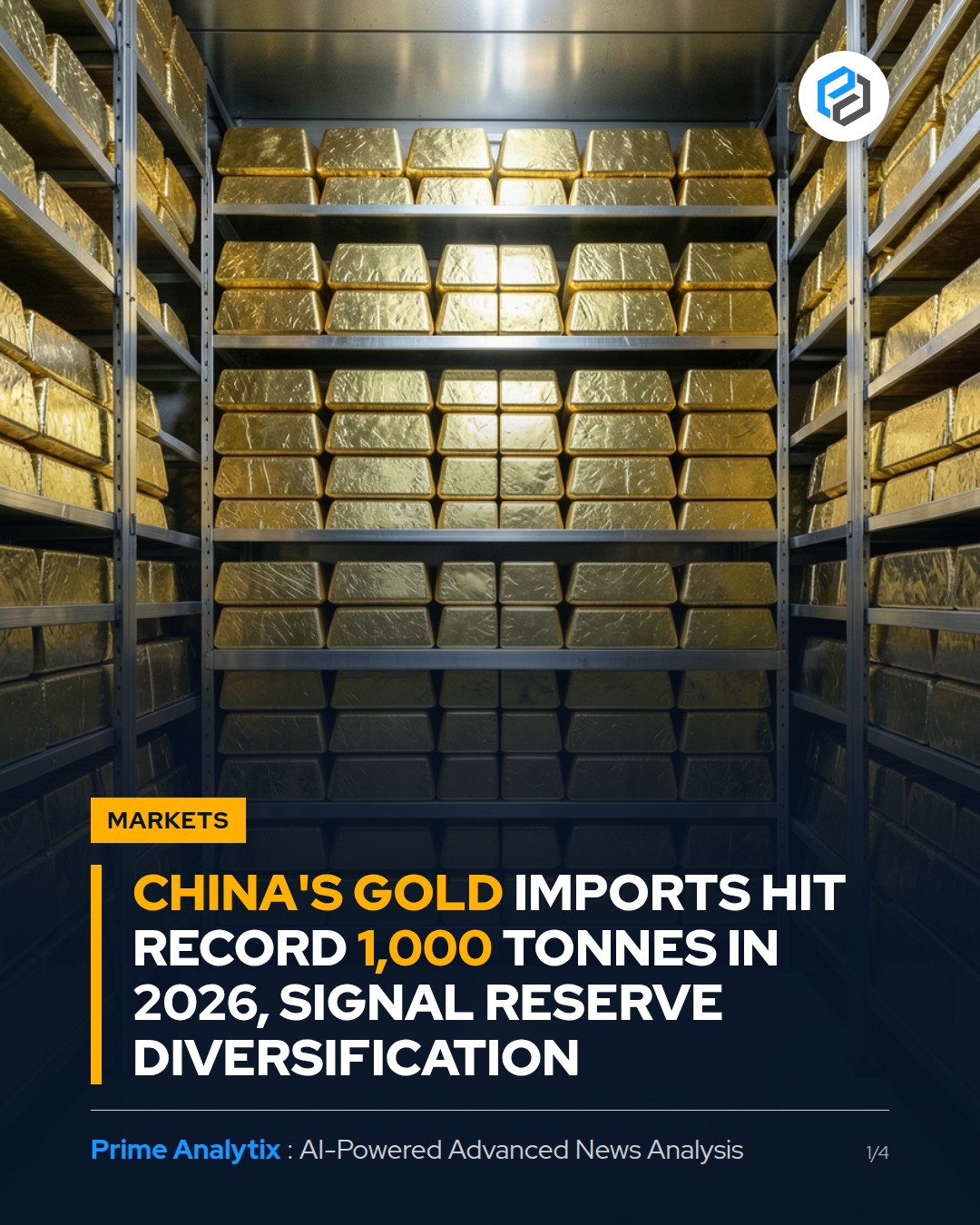
China's central bank and households drove a record surge in gold imports, with the country taking in over 1,000 tonnes in the first eight months of 2026, exceeding 2025 totals. The People's Bank of China (PBOC) purchased 23 tonnes in September 2026, its largest monthly buy since 2023, extending a 23-month streak. Analysts say this reflects Beijing's push to reduce reliance on U.S. dollar assets and Chinese households' search for safe havens amid weak property and stock markets. The PBOC's purchases, combined with retail demand, have supported bullion prices despite U.S. interest rates, which typically suppress non-yielding assets like gold.
China imported $158.8 billion worth of gold in the first eight months of 2026, compared to $96.5 billion in all of 2025. The PBOC added 23 tonnes of gold in September 2026, its largest monthly purchase in nearly three years. China's gold reserves totaled 2,387 tonnes as of August 2026, less than a third of the U.S. stockpile. Meanwhile, China's one-year government bond yield fell to 1.2% in 2026, compared to 4.46% in the U.S., making dollar-denominated assets less attractive.
The shift underscores a broader geopolitical realignment, with gold serving as both a hedge and strategic reserve. The PBOC's long-term purchases provide price stability, while retail demand reflects broader economic anxiety. This trend could reshape global reserve allocation, challenging the dominance of U.S. Treasuries in foreign-exchange reserves. However, risks include a recovery in China's property and equity markets, which could reduce gold demand, and a weaker yuan making gold more expensive domestically.
Chinese households and businesses are reallocating savings to gold, while global gold markets benefit from sustained demand. The PBOC's strategy to expand domestic gold markets presents opportunities for infrastructure development and liquidity. Analysts note that sustained central bank purchases could support long-term price stability, benefiting investors and miners.
Analysts expect gold prices to rise to $4,750 to $5,500 per ounce by Q1 2027. The PBOC may continue replenishing inventories as part of its domestic market-building strategy.
China's record gold imports signal a strategic shift toward diversifying reserves and hedging against economic uncertainty. The key uncertainty lies in whether geopolitical tensions or domestic recovery will temper demand for gold in the near term.
Topics: Gold Market Trends, Central Bank Strategy, U.S. Dollar Dependence, Gold Reserves, Economic Uncertainty, China Economy, PBOC Purchases
#ChinaGoldImports #PBOCPurchases #GoldMarketTrends #USStrategyShift #EconomicUncertainty
Source: CNBC
Post a Comment
Post a Comment